Blog Book Club #34: The Quantum Ogre

Welcome to this week’s blog book club. This week we are discussing “The Quantum Ogre,” by Courtney Campbell of the blog Hack & Slash.

Next week we’ll be reading ”Toybox Style Play,” by James Raggi

You can see a list of previous blog club posts here.


In our discussion around usage dice a few weeks back I mentioned being impressed by their legacy and how far the concept had spread outside the blog-o-sphere. But quantum ogres are likely even more well known and are the subject of chapters in books on DMing and longwinded youtube videos. In short: they’re an evergreen topic that is likely to appear in several types of RPG play. Long before I had ever heard of the OSR, when I was introduced to this concept, it really shifted how I thought about preparing and running games and what makes for a satisfying play experience.

The gist is that you should not force players to experience planned encounters because then you are robbing them of choice! Near the end the post also discusses the most bang for you buck prep you can do for a session of a sandbox game. I find this to be a very valuable inclusion and I wish I had encountered it sooner alongside learning about quantum ogres.

The way I read the post there’s this assumption that the only reason someone would subject their players to a quantum ogre if they had a bad motivation: lazy with prep or ego tripping. Much of the blog is spent trying to dismantle the reasons someone might choose to employ a quantum ogre: worry that players to miss out important or the need for an obstacle if players choose to adventure in an unexpected direction.

I will digress because there’s a different motivation at play that I had to overcome and I feel like its worth bringing up. When I first started to learn how to run the game I thought about it like nutrition. We learn that our bodies need carbs, fats, and proteins and there can be an urge to add these elements to every meal. Some DMs learn the important components of fantasy adventure, of which adversaries are a vital part of the framework. When the party’s actions circumvent a major obstacle and remove one of the “adventure macros” such as an antagonist, alarm bells can go off in a GMs head “will this session stink if they have nothing to fight?” In RPG systems where fighting is one of the major draws there may be an urge to “fix it” by forcing the players to experience a version of the encounter they had just avoided.
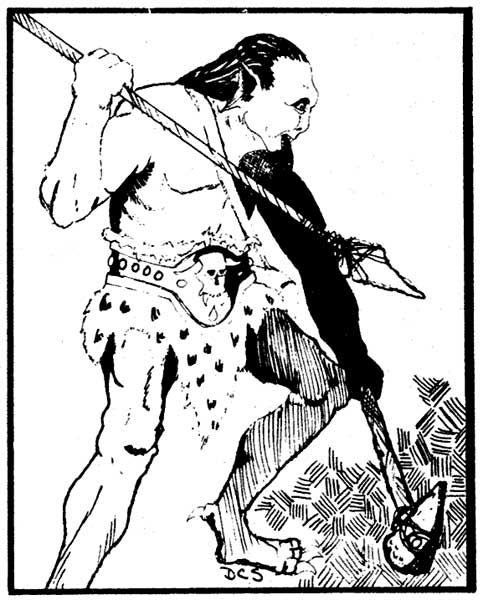
For me to kill the quantum ogre, I had to let go of the idea that the GM’s purpose is to entertain my friends and that I am responsible for the amount of fun had in a session. Today I believe its the entire groups responsibility. The GM is not the baby sitter and the party is allowed to make choices that will impact the flow of the session, sometimes in unsatisfying or anticlimactic ways. Growing up is accepting that sometimes you can eat ice cream for dinner, macros be damned. Overall I think the blog post does a good job explaining why Quantum Ogres are the wrong choice regardless of the particular motivation at play.

If you enjoyed reading this week’s blog post there are follow ups in this series on Hack & Slash. “Slaying” and “Resurrecting” Quantum Ogres were written in the following days and explore the subject with greater nuance. Unfortunately, I have only skimmed them.

Was this blog post influential to you as well?

1 Like

Interesting that this links to a series of posts rather than a singular one. Looks like that’s how it was on Marcia B’s list, but I’m not sure if it’s intentional. Regardless, I read all of them.

I like the emphasis in the posts on giving players information so they can make choices. I think doing that even makes it a little harder to spring a quantum ogre on a group since they could figure out ahead of time where the ogres live. It reminds me of Chris McDowall’s ICI Doctrine. Without players being able to make informed choices, the choices are meaningless (quantum ogres or no).

Here are a couple of stories from my history that have shaped my distaste of quantum ogres:

  • Quantum Spiders: In the first D&D campaign I ran (3.5E), my players sought a bandit hideout in the middle of some woods. Rather than take a trail crossed with large spider webs, the players cut through the woods. I still had them fight my prepped giant spider encounter. When I admitted I just had them fight the spiders despite their choice, the one player who was excited at his clever play immediately deflated.
  • Sleeping Automaton: In a different 3.5E game I played an automaton character who was the de facto trap “finder” since they were protected from most traps we stumbled into. At one point my character encountered a magical sleep trap. Despite my automaton not needing sleep and being immune to sleep magic, the DM ruled the trap still affected the character so an ambush could happen. Admittedly, this DM ran a very video game-y campaign where villains remained invincible during their monologues, so perhaps it was not surprising, but I internalized that annoyance as something to avoid in my own games.
1 Like

I admit I haven’t read the following posts of slaying and resurrecting the quantum ogre (or, at least, I have no memory of those), however I am still on the same position: I don’t get how the quantum ogre has to do with agency… I wrote about this topic a couple of times, in my last post about it, I used namely the quantum ogre example to explain my doubts.

Here below the link, pls let me know if I miss smtg in the picture. Thanks and may the fun be always at your table!

I think avoiding the Quantum Ogre is an essential part of OSR design ethos - because it’s about the integrity of the world and referee honesty. Both of these come down to player trust in the game world as modelled whole rather then a narrative or set of branching narratives, and more importantly that the referee is an impartial arbitrator.

While I have heard again and again that players can’t detect quantum ogres I both am doubtful that this is true and convinced that there’s more to it then that.

With the issue of the wholistic approach to world building, and shunning the quantum ogre one allows the setting to better have persistent elements. When the players successfully avoid the ogre they ogre still exists in the setting - it is unresolved and can interact with the regional sandbox or remain as something to investigate/deal with later. It can grow in power, become something a faction conquers or allies with and otherwise helps to flesh out the game in a way that tends to feel very responsive to player choices. This of course only matters in a campaign, but it helps do a lot of the complex world development and responsiveness work.

On the issue of referee integrity shunning the quantum ogre is part of a whole set of tools that build trust between players and referee. Trust is necessary, because OSR games are traditionally high randomness and high lethality. Players need to know that bad luck is bad luck and that the consequences of poor decisions are something beyond the referee’s whim. In contrast, if the referee is juggling encounters and events to counteract the players’ choices, even for the purpose of story, how can they be trusted not to be making bad events worse and the question of why the referee isn’t intervening to prevent catastrophe as a result of bad rolls or mistakes?

In a high risk to PC’s game where there are a lot of options and where consequences matter one gets the joy of victories that feel earned and narrow escapes or even losses that are exciting because they feel like they could have gone another way. A lot of this is lost when the players perceive the referee as antagonistic (or as coddling them) - and the quantum ogre adds to that impression.

Now … if one is playing a cinematic, scene based game centered around complex tactical encounters with low PC lethality and a conception of the referee as storyteller rather then arbitrator … it’s a different story. There’s nothing wrong with this style of game either, Chris Perkins makes an eloquent case for it in his writings, but it’s not the OSR game (or at least not the game OSR systems tend to be built to support). Then of course there are games with shared narrative control…also a different situation.

4 Likes

I’ve come across this idea a couple times in the last few weeks.

I brought it up with one of my players who basically affirmed that I was on the right track with just putting situations in front of the group and asking them what they would like to do with it.

I don’t recall the episode, but Brad from the Between 2 Cairns podcast also said something similar, that it’s not up to the GM to pull the fun out of the players, but up to the players to get something out of the situations that the GM has set up.

I’m still working on my GMing, but hearing that has given me a lot more confidence to let players do what they will in the sandbox and let the dice fall where they may.

3 Likes