Blog Book Club #37: The Pointcrawl

Welcome to this week’s blog book club. This week we are discussing Crawling Without Hexes: the Pointcrawl by Chris Kutalik of the Hill Cantons Blog.

Next week we’ll be reading Why D&D Has Lots of Rules for Combat by Nat.

You can see a list of previous blog club posts here.


This week we’ll be talking about the origin of pointcrawls.

Inspired by a Civil War Board game: A House Divided first published in 1981, Kutalik’s method of travel eschews wargame style hexes with a GM-facing map which abstracts traveling in a campaign world down to points of interest (POI) and travel vectors.
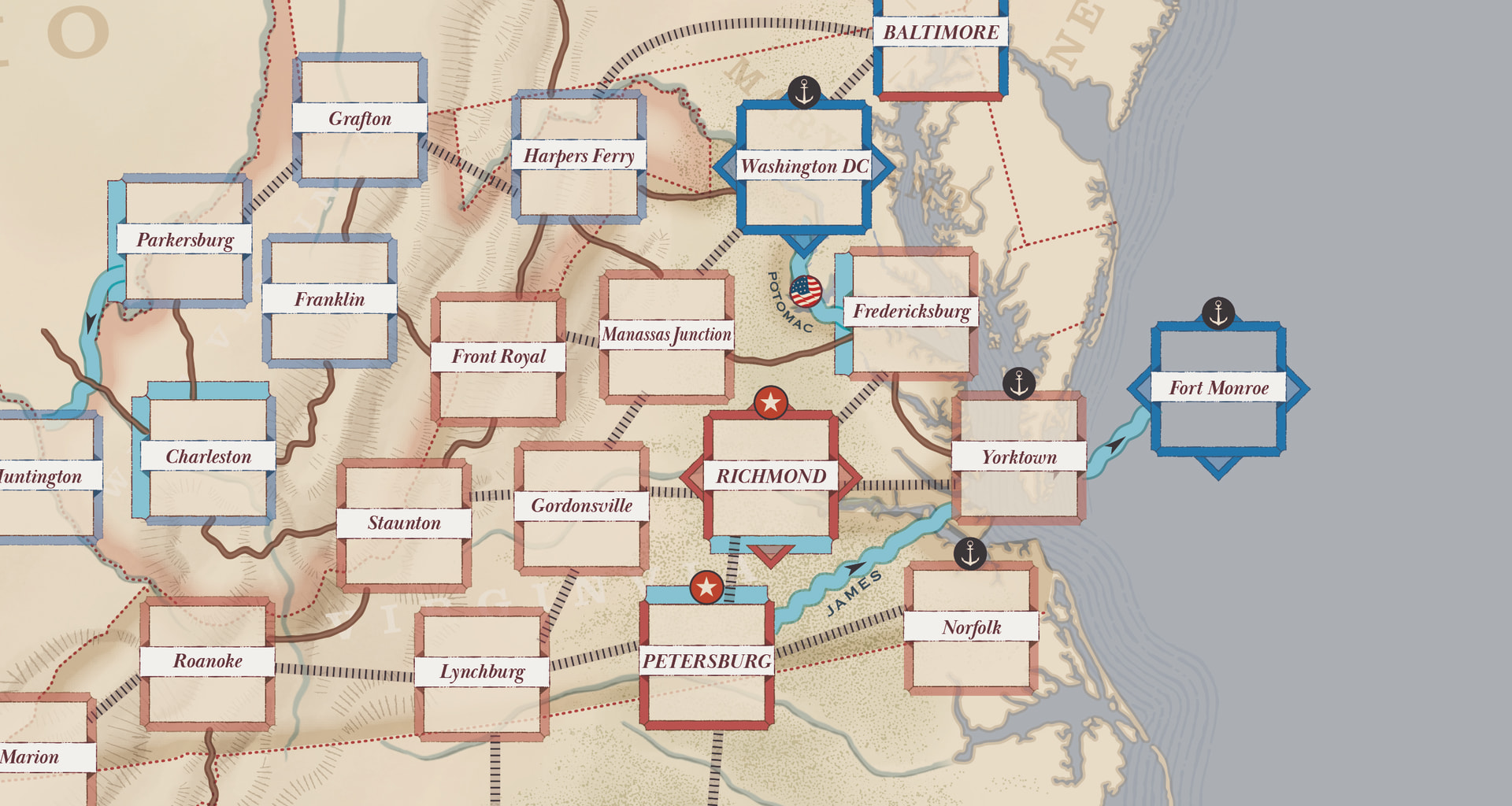

A House Divided: Designer Edition (2024)

Different types of POIs are noted on the map including settlements, landmarks, and adventure sites. The map also will contain travel vectors: like roads, tracks, paths, rivers and creeks. The possibility of secret paths for the players to discover or areas that need guides are also mentioned. One frequent hang up people mention with point craws is feeling that this approach is more limited than hexcrawling, however many who use them typically include a way of ‘off roading’ that is more costly to travelers than following an established travel vector.

While abstract in some ways, Kutalik suggests drawing terrain on the map as a way for the GM to visualize the type of area the party is traversing. Travel vectors contain information on the frequency of the wandering monster roll between POIs. Two advantages stated in the post include: emphasizing the importance of roads and better communicating impassable terrain and allowing geography bottlenecks to be significant. As an added bonus map has space for notes that may be useful during play.

Two years after this post, Chris Kutalik published Slumbering Ursine Dunes in 2014, which is one of the most widely celebrated adventures designed around this method. Later in our blog book club we’ll revisit Kutalik’s use of point crawls in 2014 and again in 2018 with Anne Hunter of DIY& Dragons. Cairn has embraced the pointcrawl as well, integrating them into the travel rules of its 2nd edition. Despite these advances, pointcrawls are still something of a rarity in adventure design and aspects of their design are frequently misunderstood.
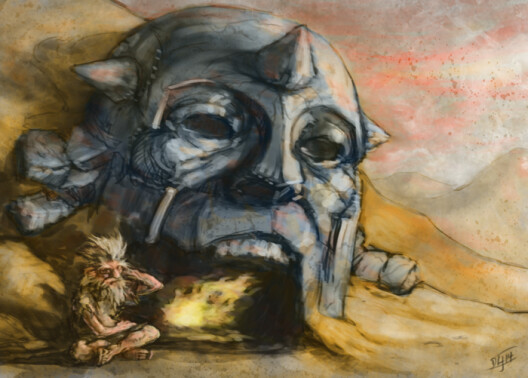

Slumbering Ursine Dunes Back Cover (2014)

I’d love to hear more from you all about your current or past experiences with point crawls. I will also do my best to summon my friend @derekb, a point-crawl aficionado, to weigh in on the subject.

3 Likes

Personally I don’t really understand preferring hexcrawls, and never have. When Chris first started talking point crawls back in the early G+ days I immediately liked them. This appreciation has grown.

I don’t think hexcrawls offer anything more then pointcrawls really, they are easy to map I guess. The mechanics of point crawls to me feel much more like pre-modern travel though. The land is unknown except to those who live on it and it hides all sorts of things. Armies and merchant bands need fast scouts and local guides to move off the well known routes largely defined by pilgrim trails, incredibly costly road projects, rivers or long shared knowledge. Everything else is hidden passes, unexpected bogs and random locals who give bad directions…

To me hex maps are about plotting troop movements and artillery bombardments more then anything else.

2 Likes

Personally I see the whole “hexcrawls vs pointcrawls” debate as a false dichotomy. There is also a pernicious idea that pointcrawls don’t allow for emergent play, which is patently false.
I like hexcrawl. I like pointcrawls. Both are cool!

5 Likes

I have been summoned!

I agree with Gus and Yochai on all points.

I will also add that a lot of dislike for pointcrawls that I have encountered seems to stem from a lack of understanding the variety of ways they can be implemented. Even Chris’s original blog post has a lot of potential uses, such as hidden pathways and distinct trail types, that naysayers like to gloss over.

I do think there are use cases where hexcrawls really excel. Truly desolate and unexplored territory, mythic landscapes where fixed pathways are few and far between, territory that lacks much in the way of geographic barriers, and very large scales where you theoretically could find a path in any given direction and the particulars beyond terrain can often be abstracted away. I think Mythic Bastionland is a textbook case of something where the Hexcrawl format arguably makes more sense than a Pointcrawl due to the lack of permanent pathways and the quantum nature of the Myths.

However, I would argue that there are a lot of maps that just don’t make sense as a hexcrawl given the scale they are dealing with, and I sometimes see designers flail around for an alternative when Pointcrawls are right there. The Black Wyrm of Brandonsford, which is one of my favorite modules, has a map that is about the scale of a single 6-mile hex, and so the author made a vector map where you are essentially forced to measure distances in order to know when to trigger random encounters.

When I encountered this and was unsatisfied due to the utter lack of satisfaction that picking a random direction with no information to go on and measuring progress with a ruler brings at the gaming table, I was shocked to find that proposed solutions were either a hex grid overlay or a pointcrawl map where every location was put on the map without a care as to what pathways would be hidden or secret or how to convey that information to players.

The former solves the measuring issue, but doesn’t help the fact that 9/10ths of the hexes that you traveled to being empty is a not great table experience, and the latter ignores all of the actual advice that Chris’s first blog post actually laid regarding different path types and hidden information.

This is ultimately what drove me to develop my Player-Facing Pointcrawl method, but the foundation was laid by this series of blog posts and the designers that have since tried their hand at the method.

Good Pointcrawls are harder from a level design perspective, and certainly more difficult to make player-facing compared to printing a blank hexmap, but I think they should be considered more often than they are.

I think we have barely scratched the surface of what they are capable of doing for published material, though I hope to make my own contributions to the form soon enough.

5 Likes

I agree here - it is a fairly meaningless choice in many ways - though it does act to structure the adventure perhaps…

What I would like to see is a wilderness adventure written as an itinerary in the 14th century style … a list of towns and roads and rivers with vague notes for the players and details on the situations for the referee. Also likely a map - we aren’t medieval after all.

1 Like