Welcome to this week’s blog book club. This week we are discussing an old EN World thread [Very Long] Combat as Sport vs. Combat as War: a Key Difference in D&D Play Styles... | EN World D&D & Tabletop RPG News & Reviews
Next week we’ll be reading Making Encumbrance Work – Papers & Pencils by Nick L.S.
You can see a list of previous blog club posts here.
This forum post by Daztur examines the debate over play style that was swirling around during the development of 5th edition D&D. So. I find it hard to write about sport vs war for a couple of reasons. Obviously we are here on the Cauldron. I am taking the perspective that most people on this particular forum are either against combat as a sport, ambivalent to it or love it less than combat as war (if that’s not the case we’d love to hear from you!). Today, I will mostly be exploring my thoughts from the first post in today’s reading, but if there is something you would like to talk about that happens further downstream, be my guest.
I think the forum post does a good job of not belittling combat as sport because when such games are well supported, it can demand firm understanding of tactics, game play rules, good judgement, and creative embellishment. I would guess this is what keeps the majority of RPG players that engaged with Combat as Sport; it seems to be the default mentality of much of the RPGs I was exposed to growing up. Daztur concludes that one of the weaknesses of combat as a sport is primarily its length, and I wholeheartedly agree with this. I prioritize speed over granular options.
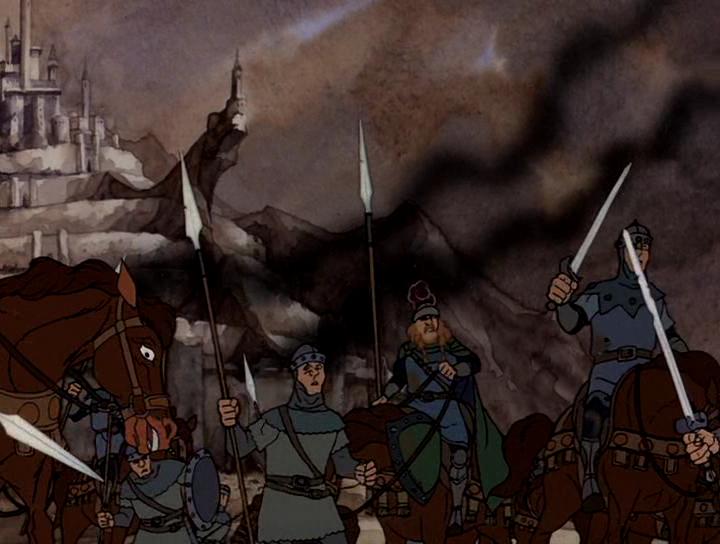
(Combat as war! Return of the King 1980)
I particularly enjoy how Daztur’s post draws parallels between a new edition of a Pen and Paper RPG and how communities of Massively Multiplayer Online RPGs are divided over which activities video game developers should create content to support: player vs player or player vs environment. The post compared combat as war to the infamous MMORPG Eve Online which takes the meaning of sandbox to the extreme and offers an unprecedented amount of freedom in determining goals and activities of its players. I have done some reading about how Gygax ran his games like an analog MMO prototype. A recent example of sandbox style of play that shook the OSR world was Over/Under, a mothership discord server that took on a life of its own.
Daztur’s post explores that combat as war can incentivize players to adopt extreme actions that can be disruptive to players who are primarily seeking immersion from interacting with a fantastical world. I would contrast this with your standard OSR player who might put agency at the forefront of their player experience. The post supposes that a combat as sport battle system can be set up in such a way to try and reinforce the tone of the genre rather than just have it be a free for all of survival where anything goes.This makes me think back to our discussion on fantasy Vietnam and how as an outsider from the OSR, I originally perceived that combat as war was antagonistic and thoroughly not in keeping with the genre conventions that I was imagining. My thinking on this has changed over time and now I prioritize novel and exciting play experiences at the table over trying to engineer a particular type of story with my friends.They are different kinds of fun.
I believe that in some ways generational touch stones of fantasy can be important for this discussion. For example, as a millennial, I was incredibly influenced by movies like Harry Potter, Lord of the Rings, Star Wars, and Pirates of the Caribbean which shaped my idea of how fantastical worlds should be imagined. A look at 1e DMG’s Appendix N shows a very different list of fiction. I believe fictional works can prime players for a particular type of experience and there can be friction between players and games when those expectations are not met.
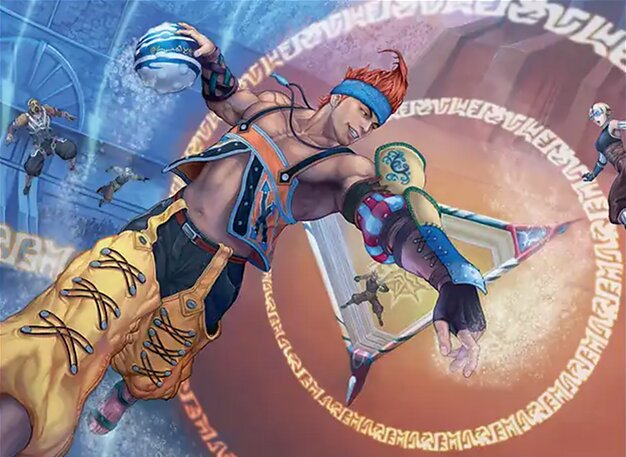
(Combat as Sport! Wakka from Final Fantasy X)
Daztur’s post argues that over the years the balance has shifted away from combat as war toward sport with each major edition release. While that might have been true once, I see Modern D&D as sitting in a middle ground between war and sport in a way that I personally feel displeased with. Something I found interesting that was buried in the middle of the post is a discussion over how war or sport play style is mutable within a particular system. I believe this is true, however there may be some instances where people pursuing a particular experience should just pick a system designed to uphold that style of game.
For example, unlike Pathfinder 2e which is a difficult game ideally suited for combat as sport, the standard set of assumptions in D&D 5e make playing that as sport too easy, which I found required a constant escalation of threats. On the other hand, if both players and DMs decide to use 5e as a game with combat as war, they would need to override a lot of the safeguards built into the game, and I suspect it would chafe against the play culture that has built up around 5e over the last decade.
Among a group of people who emphasize the importance of creating and showing off bespoke characters embracing true combat as war can place GMs in an antagonistic role. Rather than being a neutral arbiter of the world, it felt like I was trying to kick over a friend’s sandcastle, lame when I was going through the motions and devastating when I mounted a genuine threat and succeeded. In the OSR, most players care far less about their characters who exist as avatars of the players will and I am happy to shred up their sheets when their own choices lead to their doom.
Thoughts for discussion:
- What do you like about combat as war?
- Does the idea of playing D&D-likes as an analog MMO excite you or do you find it cumbersome and tedious?
- Do you believe that genre expectations can prime someone for preferring war vs sport? Or is something else more important?
- Do rules light games have an innate tendency toward combat as war?
- Story games have risen and crested in the time between the forum post was written and today. If combat is neither war or sport does that make it combat as a story?