Welcome to the blog book club. This week we are discussing “OD&D Setting Posts in PDF” by Wayne Rossi of Semper Initativus Unum.
Next week we’ll be reading “A Procedure for Wandering Monsters” by John B. of the Retired Adventurer.
You can see a list of previous blog club posts here.
Starting off we are treated to a rendition of the wilderness survival map. I’m usually not the biggest fan of it, but I felt like this project helped me see this very familiar terrain through new eyes. So what are some good things about the map? Its not too big. Later Trad D&D settings were famously inflated to ridiculous sizes (looking at you Eberron). I once ran a hex crawl through a large chunk of Faerun and that was exhausting! So as a result I enjoy a more compact area of play.
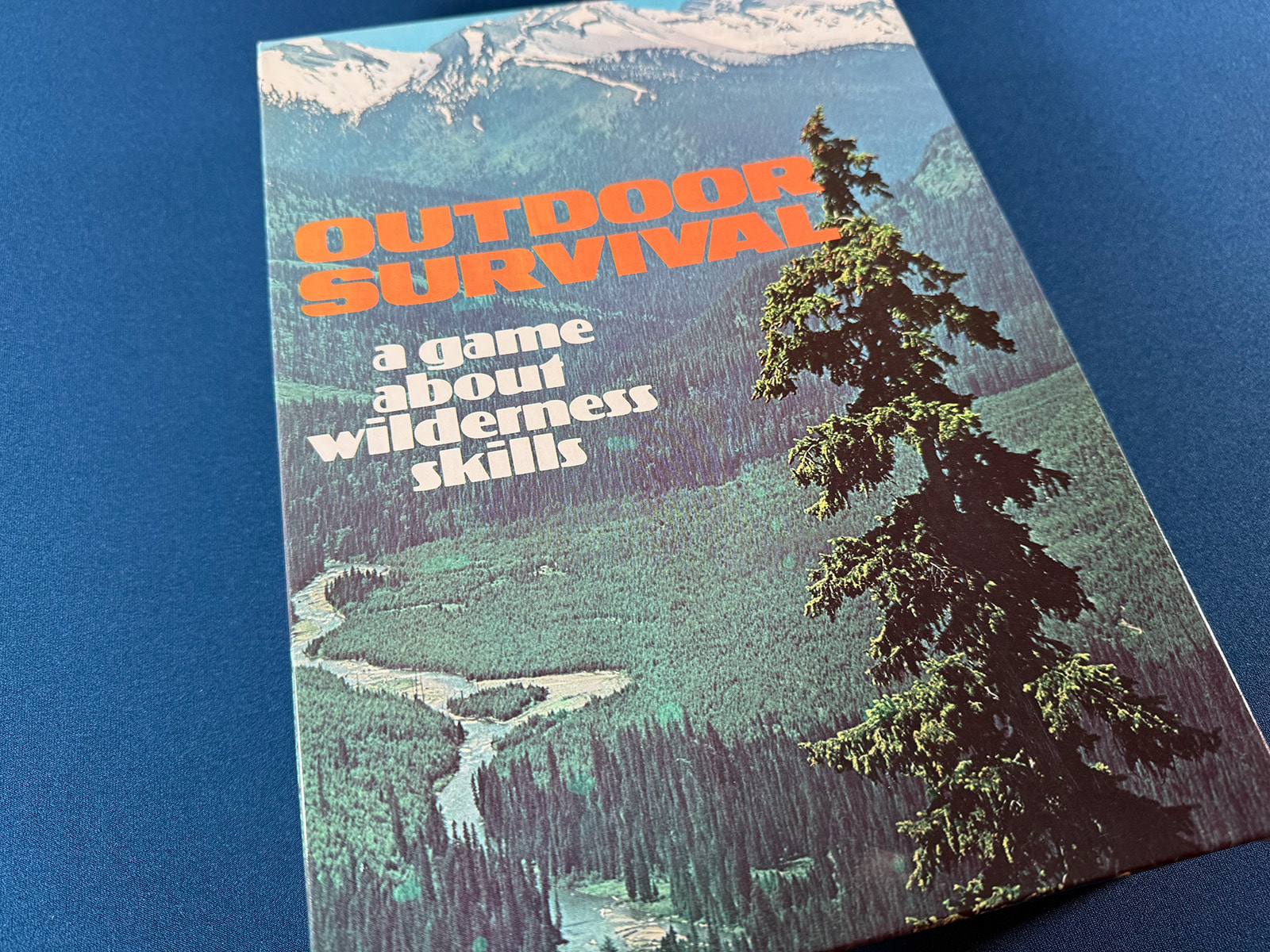
The introduction notes that the world finds ways to bend characters back toward adventure, even if mind control has to be applied. While this loss of agency may chafe players, I’ve seen the alternative play out where a setting provides no incentive for characters to risk their lives so they don’t. There’s something to be said for a setting designed for the activities you want to see happen.
The introduction notes that the OD&D world is strange because its a lot of pulp settings smashed together. Its a place Conan, John Carter of Mars, Captain Peter Blood, Heracles, and Tarzan could all grab an ale together. I appreciate that they don’t try and justify why these disparate elements should fit together. It just is. I also appreciate the use of statistics to explain how sparsely populated this land is and bring additional perspective of what all of these tables would look like if you followed them through to their logical consultations.
The compilation is broken up by subjects: Noble Castles, Wizard’s Towers, Clerical Strongholds, Woods of Myth, Time-Forgotten Swamps, Savage Mountains, and Desolate Deserts, Raging Rivers, and Grasslands with Cities. Reading through these sections it struck me that many types of D&D campaigns will choose to focus on one of these chapters. For example, the Arthurian exploits in Wildendrem: Valley of flowers, the mythical forest at the heart of Dolmenwood, or even DCC’s Purple Planet. I am seeing that the true joy and madness at the heart of the implied OD&D setting is that players could encounter any of these elements.
I thought it was fascinating how the document extrapolated information such as ‘how do sieges work?’ and ‘What type of magical servants would a wizard command?’. I particularly enjoy the description of the basilisk garden of a wizard tower on page 4 as well as the idea that clerics are vampire hunting templars. I also had a laugh at dinosaur filled swamps controlled by Namor-esque mermen. While I had encountered such dinosaur swamps in other D&D settings they seemed vary out of place without the other strangeness such as the Martian deserts and cave-man mountains, and lawless cities where undead prowl through the night.
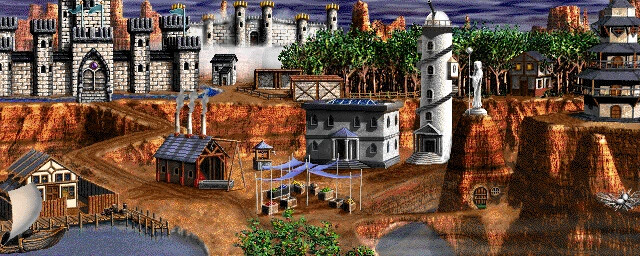
The wizard town from Heroes of Might & Magic II
The blog presents a very fantastical version of D&D that still feels anchored in tradition. The setting reminds me a bit of Heroes of Might and Magic games I played as a kid. Maybe OD&D was an inspiration? I think before reading this I was expecting something much more in line with the (likely inaccurate) stereotype of Greyhawk my brain has cobbled together over the years. Overall OD&D isn’t a setting I would run, because I think I am a little too far removed from the pulp touch stones that make this setting tick. But I would definitely be a player for someone who runs OD&D with the enthusiasm.
One of my take aways from this read is that perhaps a D&D setting shouldn’t be the work of someone looking to be the next great fantasy lit ‘world builder’, but instead a blending of pop culture that inspires referees and players to engage with the world with enough new context that they may still be surprised by it.
So would you play in this setting? Why or Why not?